There is a tool in the wire-worker’s shop that most people walk past without understanding what they’re looking at.
It’s a flat steel plate, maybe the size of your palm, drilled through with a series of holes. Each hole is slightly smaller than the last. You thread raw wire through the largest hole, grip it with draw tongs, and pull. The wire comes through reduced — thinner, longer, more refined. Then you do it again through the next hole. And the next.
This is the draw plate. And it is one of the most honest tools ever made.
The wire doesn’t want to go through.
That’s the first thing you notice. There’s real resistance — the metal pushes back, the tongs bite, your shoulder takes the load. You’re not coaxing the wire. You’re insisting on it. And the wire, being steel, has no choice but to comply.
What comes out the other side is not the same wire that went in.
It’s harder. More uniform. The grain structure has tightened. The impurities have been worked toward the surface where they can be dealt with. The wire that emerges from the draw plate is ready for something the raw wire never could have been — it can hold a pattern, close a ring cleanly, bear the tension of a finished weave without distorting.
The draw plate doesn’t add anything. It removes what doesn’t belong.
I’ve been thinking about this lately in the context of what most people call “self-improvement.”
The word itself is the problem. Improvement implies you’re broken and need fixing. It implies addition — more habits, more routines, more systems, more apps, more content to consume. The self-improvement industry is built on the premise that you are insufficient and that the right product will complete you.
The draw plate knows better.
What the draw plate understands — what every serious craftsman eventually learns — is that the work is not about addition. It’s about reduction. It’s about finding the essential form that was always inside the raw material and removing everything that obscures it.
You are not broken. You are being forged.
And forging is not the same as fixing.
The hardest part of the draw plate process is the first pass.
The wire is at its most resistant when it’s most raw. The impurities are distributed throughout. The grain is loose, unaligned, uncertain of its own direction. You have to commit to the pull before you can see the result. There’s no way to know, from looking at raw wire, exactly what it will become.
You just have to start.
This is where most people stop. Not because the work is impossible — but because the resistance feels like a signal to quit. The metal pushes back, and we interpret that as wrong direction when it actually means right direction, keep going.
Forging resilience is not the absence of resistance. It is the decision to pull through it anyway.
The draw plate works through repetition.
One pass doesn’t transform the wire. It begins the transformation. The second pass continues it. By the fifth or sixth pass, you’re working with something that barely resembles what you started with — not because it’s been replaced, but because it’s been revealed.
This is the rhythm of the forge. Patient. Deliberate. Building.
One ring at a time.
I think about this when I look at the Grail Diary — the daily practice tool we built for exactly this kind of work. Not a productivity app. Not a habit tracker dressed up in motivational language. The Grail Diary is a draw plate for the mind.
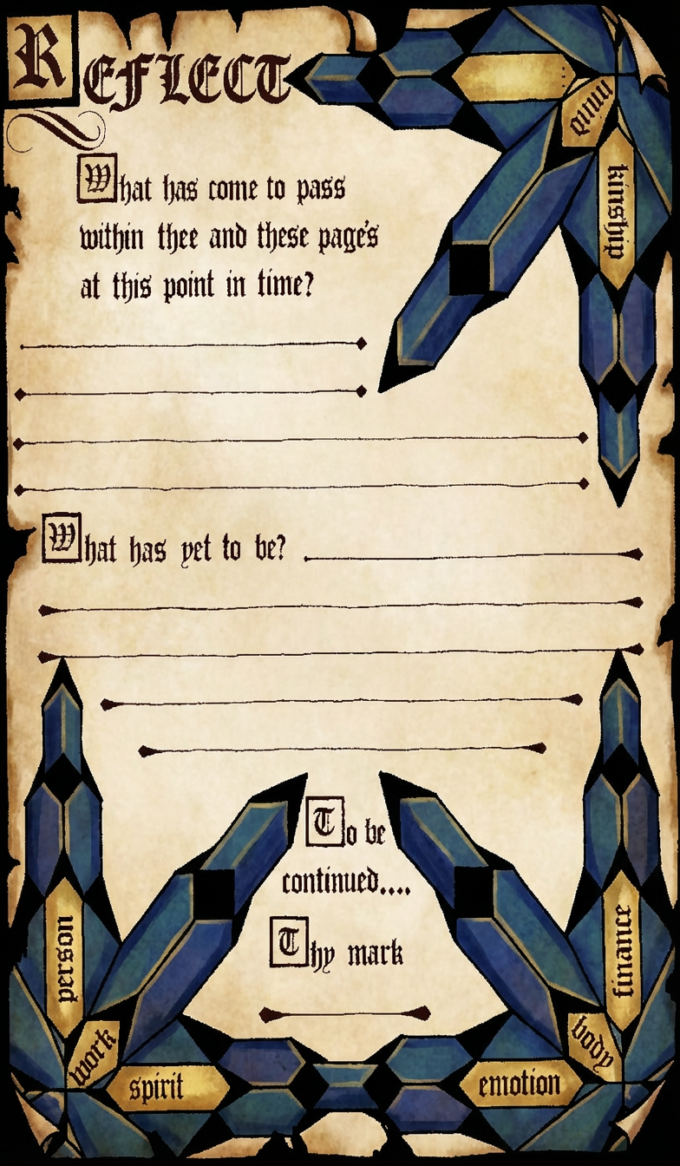
Every day you open it, you’re making another pass. You’re recording what happened, what held, what bent, what broke. You’re tracking the 24 Markers — the waypoints on the quest — not to grade yourself, but to see the grain structure of your own life more clearly. To find where the impurities are concentrating. To notice where the wire is thinning in ways that will serve you, and where it’s thinning in ways that need attention.
The Grail Diary doesn’t tell you who to be. It helps you see who you already are — and who you’re becoming through the daily work of forging resilience.
There’s a moment in the draw plate process that every wire-worker knows.
You’ve made several passes. The wire is getting harder to pull — not because the process is failing, but because it’s working. The metal is denser now. More refined. It’s resisting because it has more integrity than it did at the start.
That resistance is not a problem. It’s evidence.
The same thing happens in the forge of daily practice. There comes a point where the work gets harder not because you’re doing it wrong, but because you’ve developed enough clarity to see what actually needs to change. The easy impurities have been worked out. Now you’re dealing with the deep grain — the patterns that have been there for decades, the habits of mind that feel like identity because they’ve been present so long.
This is where the draw plate earns its keep.
This is where the daily practice of forging resilience — the quiet, unglamorous work of showing up and making another pass — separates the craftsman from the dabbler.
The finished wire is not the goal.
The finished wire is the evidence of the process.
What you’re building, one pass at a time, is not a product. It’s a capacity. The capacity to hold tension without distorting. The capacity to close rings cleanly under pressure. The capacity to bear the weight of a finished weave — a finished life — without losing the pattern.
The draw plate doesn’t care how long it takes. It only cares that you keep pulling.
So does the forge.
The Grail Diary is where the daily draw plate work happens — structured, intentional, one entry at a time. Realm Maker Access: $12/month. Your quest, structured.
grail-verse.com/the-foundry